Early Access
Agentic Control
Versteht Ziele, plant passende Schritte und prüft Policies und Freigaben. Für klar abgegrenzte, begleitete Pilotfälle.
Early Access kennenlernenControlled IT Operations Automation
Mache aus vorhandenen PowerShell-Skripten und APIs kontrollierte, delegierbare IT-Services – mit Freigaben, POD-Ausführung im Kundennetz und nachvollziehbaren Ergebnissen.
Von der Steuerung bis zum Zielsystem
Planen · Policies prüfen · Freigaben einholen
Freigegebene Jobs · PowerShell & APIs · Wiederholbare Ausführung
Bestehendes Wissen. Klarer Ablauf.
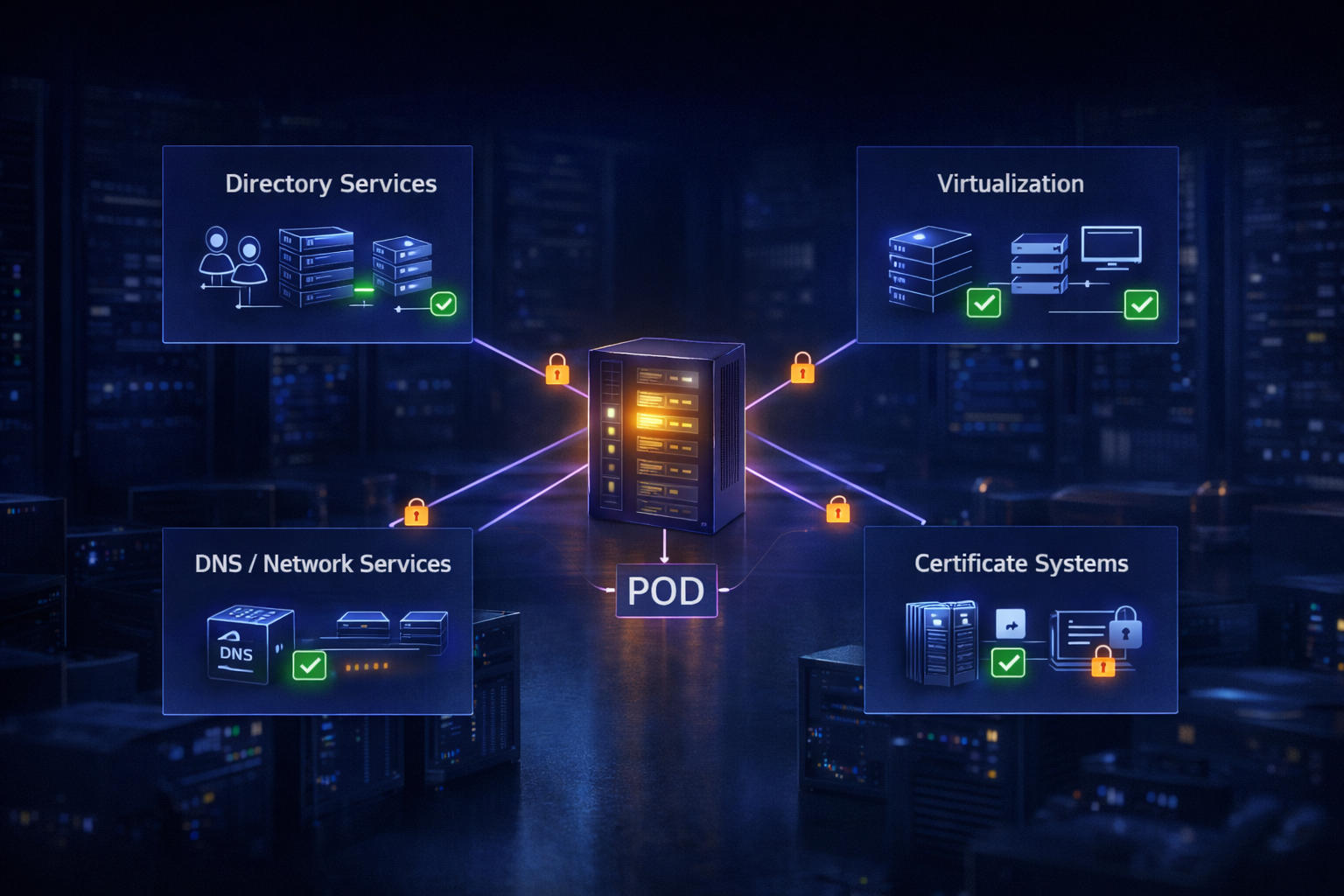
Addy ist die Automation Engine. Ein POD führt freigegebene PowerShell-Automationen in deinem Netzwerk aus. Deine Endpoints bleiben dort, wo sie hingehören.
Die AdminsBuddy Plattform
Kontrollierte IT-Services auf Basis deiner vorhandenen Automationen. Mit klar getrennten Rollen für Steuerung, Ausführung und Infrastruktur.
Versteht Ziele, plant passende Schritte und prüft Policies und Freigaben. Für klar abgegrenzte, begleitete Pilotfälle.
Early Access kennenlernenAddy stellt bekannte PowerShell-Automationen als Services bereit: mit Parametern, Requests, Freigaben und Ausführungsprotokollen.
Automation Engine entdeckenFühren freigegebene PowerShell-Automationen in deinem Netzwerk aus – nahe an AD, DNS, vCenter und weiteren Endpoints.
Architektur ansehenResources mit Parametern als Service bereitstellen. Per Web oder REST API anfordern.
Berechtigungen und erforderliche Freigaben bestimmen den Ausführungsweg.
Die Automation Engine übergibt den Job. PowerShell läuft im Kundennetz.
Parameter, Output und Status bleiben im Request-Log nachvollziehbar.
Mit einem konkreten Prozess starten
Vorhandene PowerShell- und API-Automationen nutzen. Einen klaren Service daraus machen.
Benutzer und Gruppen als standardisierten, dokumentierten Prozess bereitstellen.
Freigegebene Aufgaben delegieren, ohne Adminrechte weiterzugeben.
Wartung und Rollback als definierten, wiederholbaren Service anfordern.
PowerShell-first automatisieren, mit klaren Zuständigkeiten und Nachweisen.
Operative Kontrolle statt Skript-Silos
Bestehende Automationen bleiben die Grundlage. AdminsBuddy verbindet sie mit dem Ablauf, den dein Team im Alltag braucht.
Parameter, Output und Status im Request-Log reduzieren Rückfragen und erleichtern Übergaben und die Prüfung einer Ausführung.
Standardisierte Jobs und verwaltete Skripte reduzieren manuelle Fehler. Request-Logs ergänzen deine Runbooks.
Berechtigte Kollegen fordern Services selbst an. Das verkürzt die Abarbeitung wiederkehrender Aufgaben und entlastet dein Team.
Vorher: Tickets, Copy-Paste und manuelle Klickpfade.
Mit AdminsBuddy: Ein kontrollierter Service mit Parametern, Freigabe, POD-Ausführung und Log.
Ergebnis: Reproduzierbare Abläufe und prüfbare Ergebnisse.
Agentic Control ergänzt die Automation Engine für klar abgegrenzte, begleitete Pilotfälle. Policies, Freigaben und Audit bilden den Rahmen für Planung und Ausführung.
Agentic Control im Early Access ansehenVon wiederkehrenden Aufgaben zu IT-Services
Starte mit einem klaren Automatisierungsfall. Im Assessment prüfen wir gemeinsam Prozess, technische Voraussetzungen und den sinnvollen ersten Service. Danach entscheidest du auf einer belastbaren Grundlage über einen Proof of Value.